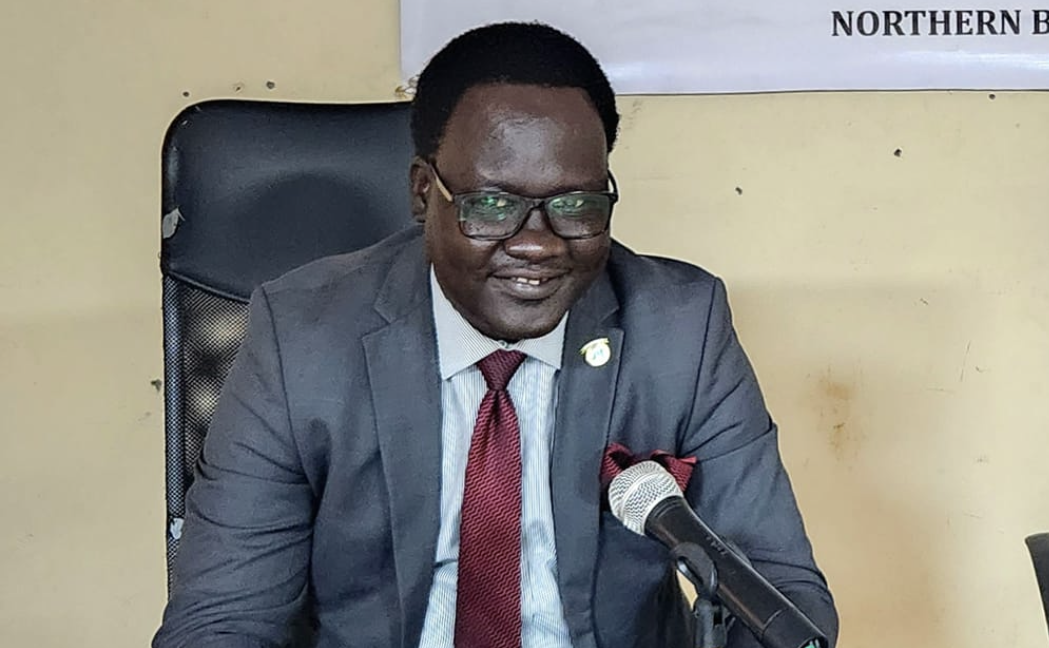
By Malek Cook-Dwach| PhD Candidate in Water Security and Climate Adaptation
Water Beyond the Floods- Few environmental issues in South Sudan have sparked as much public debate as the proposed dredging of the Naam River, a tributary of the White Nile that flows into the Sudd Wetland one of the world’s largest freshwater ecosystems.
What began as an emergency response to devastating floods in Unity State has since evolved into a national conversation about environmental protection, water governance, national sovereignty, and the country’s long-term development.
The debate is no longer simply about removing weeds and sediment from a river. It is about how South Sudan chooses to manage one of its most valuable natural resources. Will decisions be guided by scientific evidence and long-term national interests, or by immediate political and humanitarian pressures?
As a researcher specializing in water security and climate adaptation, I believe the Naam River controversy offers an important opportunity for South Sudan to demonstrate that sustainable water management requires both compassion for affected communities and sound scientific planning.
The current debate dates back to 2022 when the late Minister of Water Resources and Irrigation, Manawa Peter Gatkuoth, announced that South Sudan and Egypt had agreed to cooperate on dredging the Naam River. Shortly afterward, excavators supplied by Egypt arrived in Unity State to clear silt, aquatic weeds, and other obstructions believed to be slowing the river’s flow.
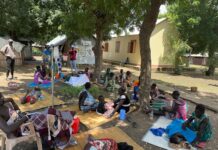
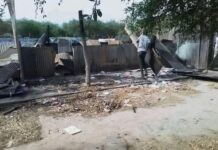
For thousands of residents displaced by years of severe flooding, the machinery represented hope. Entire communities had watched their homes, farmland, roads, schools, and grazing areas remain underwater for consecutive rainy seasons.
Some local residents had already begun manually removing vegetation from the river in an effort to restore water flow.
However, the project quickly became controversial.
Environmental experts, academics, and civil society organizations warned that large-scale dredging could permanently alter the delicate hydrology of the Sudd Wetland. They argued that changes in water flow could threaten biodiversity, fisheries, grazing lands, groundwater recharge, and the livelihoods of millions of South Sudanese who depend directly or indirectly on the wetland.
Others viewed the proposal through a geopolitical lens. They questioned whether accelerating the flow of Nile waters through the Sudd would mainly benefit downstream countries—particularly Egypt—by reducing evaporation losses before the water reaches the Aswan High Dam.
The concerns revived memories of the controversial Jonglei Canal project, whose primary objective was similarly to divert water around the Sudd to increase downstream flow.
Responding to growing public concern, President Salva Kiir suspended all dredging activities in July 2022 pending comprehensive scientific studies and established a public consultation committee to assess the environmental, social, and economic implications of the proposal.
Despite this decision, the debate resurfaced when dredging equipment reportedly returned to Unity State in 2023, reigniting disagreements between government officials, scientists, and environmental advocates.
One of the striking features of the Naam River debate is that both sides present legitimate concerns.
For flood-affected communities and state authorities, the issue is immediate and deeply personal. Years of flooding have displaced families, destroyed crops, killed livestock, damaged infrastructure, and disrupted local economies. From their perspective, improving river flow appears to be a practical and urgent solution.
Government leaders have repeatedly argued that affected communities deserve immediate relief rather than prolonged technical discussions. Their position reflects understandable frustration after years of humanitarian crises.
Environmental scientists and water experts, however, approach the issue differently.
To them, the Sudd is not simply a wetland slowing the movement of water. It is one of Africa’s most important ecological systems. It regulates seasonal flooding, filters water, replenishes groundwater, supports fisheries and wildlife, stores carbon, and provides grazing land for pastoral communities.
Intervening in such a complex ecosystem without adequate scientific understanding could create consequences that are irreversible.
Once altered, wetlands rarely return to their original ecological state.
This is particularly concerning because wetlands worldwide are disappearing at an alarming rate, making the protection of ecosystems like the Sudd increasingly important in the face of climate change.
This debate should not be framed as a choice between helping flood victims and protecting the environment.
South Sudan must pursue both objectives simultaneously.
First, policymakers should distinguish between routine maintenance of river channels and large-scale hydrological engineering. Clearing localized blockages caused by sediment or invasive vegetation is fundamentally different from interventions designed to alter the natural flow of an entire river system. Confusing these two approaches has unnecessarily polarized public debate.
Second, any significant dredging project should proceed only after an independent and transparent Environmental and Social Impact Assessment supported by comprehensive hydrological studies. Such assessments should be publicly available and subjected to scientific review before implementation.
Equally important, communities living within and around the Sudd must be meaningfully involved in decision-making. Their traditional knowledge, experiences, and livelihoods should carry as much weight as technical advice provided by government officials or foreign consultants.
Third, dredging should not be viewed as the only solution to South Sudan’s flooding crisis.
The country should simultaneously invest in integrated flood management strategies, including improved drainage systems, wetland restoration, climate-resilient infrastructure, early warning systems, watershed management, and community-based adaptation programs. These interventions can complement carefully evaluated river maintenance while reducing long-term disaster risks.
South Sudan’s future depends heavily on how it manages its water resources.
The Naam River debate is therefore about much more than a single dredging project. It is a test of whether national decisions affecting critical ecosystems will be guided by scientific evidence, transparency, and the long-term public interest.
Communities suffering from recurrent flooding deserve immediate and lasting solutions. At the same time, future generations deserve a healthy Sudd Wetland capable of sustaining food production, biodiversity, fisheries, pastoral livelihoods, and climate resilience.
These objectives are not mutually exclusive.
The challenge before South Sudan is to ensure that today’s efforts to reduce flooding do not unintentionally create tomorrow’s water crisis. Achieving that balance will require political leadership, scientific integrity, public participation, and a commitment to managing the country’s natural resources in the national interest.
The future of the Sudd and with it, South Sudan’s water security depends on getting this decision right.