
By Staff Writer
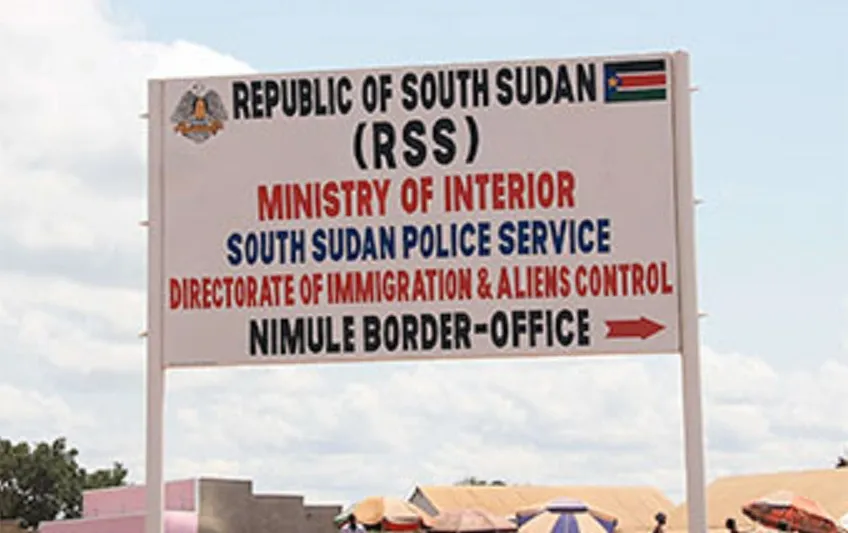
The Ministerial High-Level Committee on Economic Reform has launched a major inspection at the Nimule border crossing, targeting revenue leakages and illegal practices that continue to undermine government income at South Sudan’s busiest entry point.
The committee on Monday began a series of high-level meetings with security agencies, commercial banks, and tax collection authorities as part of a comprehensive review of institutions responsible for collecting public revenue at the border.
The first meeting brought together security agencies deployed at Nimule to discuss their role in protecting the border and preventing illegal activities that deprive the government of much-needed revenue.
Chairperson of the Committee, Hon. Pieng Deng Kuol, said the visit is aimed at identifying weaknesses in the country’s revenue collection system and enforcing government reforms.
“Our visit to Nimule is to identify the loopholes in the revenue mobilization process and to curb malpractices such as smuggling, unauthorized roadblocks, under-declaration of goods, and enforce the Presidential Order on the cancellation of non-statutory tax exemptions,” Hon. Pieng Deng Kuol said.
He emphasized that close collaboration among security institutions is critical to combating illegal trade, strengthening compliance, and improving public financial management.
The committee later met with commercial banks contracted by the government to receive tax payments and transfer the funds to the South Sudan Revenue Authority.
Discussions focused on the implementation of a recent government directive requiring taxpayers and clearing agents to make tax payments in cash. The policy is intended to ease the country’s liquidity challenges while ensuring efficient and transparent revenue collection.
Representatives of the commercial banks welcomed the directive, saying it would enhance the tax payment process and improve accountability.
The branch managers pledged to fully implement the government’s instructions and continue facilitating the collection and transfer of tax revenues into official government accounts.
The day’s engagements concluded with a meeting involving customs officials responsible for tax collection at the Nimule border post, where the committee reviewed operational challenges and measures to strengthen compliance and maximize domestic revenue.
The inspection is part of the government’s broader economic reform agenda aimed at improving domestic revenue mobilization, curbing tax evasion, and enhancing transparency in public financial management.