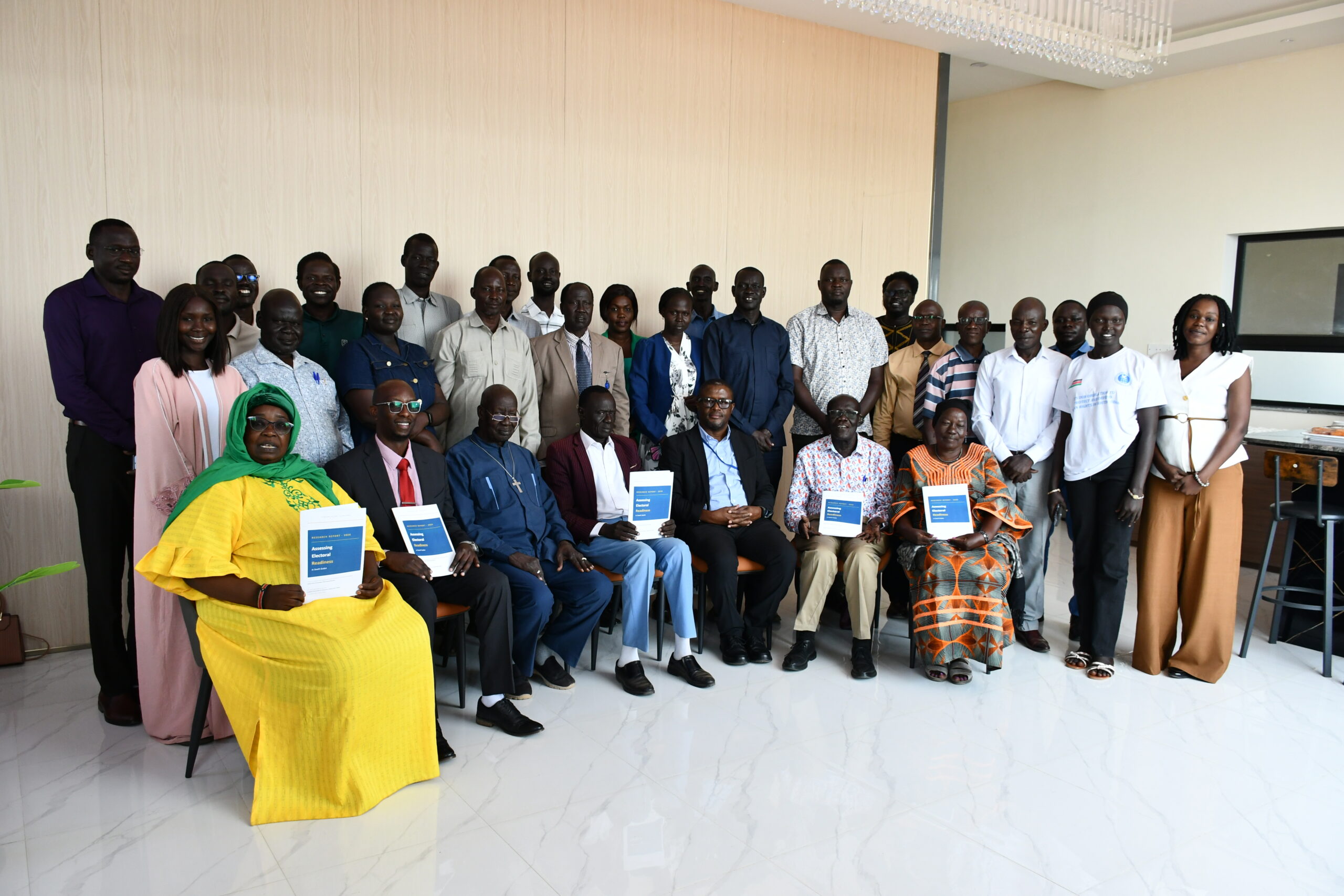
A new assessment released by the Standard Action Liaison Force (SALF) has revealed significant political, legal, security, and institutional challenges that could affect South Sudan’s planned general elections scheduled for December 22, 2026.
The report, launched on Thursday in Juba under the AHEAD Africa Project with support from the European Union, assessed the country’s readiness for elections and outlined key reforms needed to ensure a peaceful, credible, and inclusive electoral process.
The Electoral Readiness and Preparedness Assessment Report and Policy Brief draws on findings collected between May 2025 and April 2026 across six states and one administrative area.
Researchers examined public awareness, institutional preparedness, electoral laws, security conditions, and citizens’ confidence in the electoral process.
Despite identifying strong public enthusiasm for elections, particularly among young people, the report warns that major gaps remain in voter education, electoral governance, legal frameworks, and political confidence.
According to the findings, many citizens are aware that elections are expected this year but lack sufficient understanding of critical electoral procedures such as voter registration, dispute resolution mechanisms, and the mandates of electoral institutions.
The assessment also highlights concerns over limited civic education, financial and logistical constraints, unresolved constitutional and legal issues, security risks, and the growing spread of misinformation, disinformation, and hate speech.
SALF noted that while technical preparations are important, successful elections will largely depend on creating a conducive political environment.
Stakeholders consulted during the assessment stressed that political inclusion, dialogue, and confidence-building measures are essential for credible elections and long-term stability.
Among the recommendations, participants called for the release of political detainees, including the First Vice President and others detained in relation to political processes, as part of efforts to build trust among political actors and foster an enabling environment for peaceful elections.
The report also recommends launching an inclusive national dialogue involving political parties, peace agreement signatories and non-signatories, civil society organizations, faith leaders, women, youth, and other stakeholders.
According to SALF, broad-based political dialogue and consensus-building are necessary to reduce tensions, address grievances, prevent electoral violence, and strengthen public confidence in democratic institutions.
The report outlines 17 priority recommendations aimed at improving electoral preparedness before the December polls. Key proposals include expanding nationwide civic and voter education, translating electoral materials into local languages, reforming electoral laws, strengthening the independence of the National Elections Commission (NEC), ensuring adequate funding for election activities, accelerating voter registration and constituency demarcation, and implementing security sector reforms.
Additional recommendations focus on promoting the participation of women, youth, internally displaced persons, refugees, persons with disabilities, and minority groups, while strengthening mechanisms to prevent electoral violence and counter misinformation and hate speech.
Speaking during the launch, SALF said South Sudan has a critical opportunity to conduct elections that contribute to peacebuilding, democratic governance, and national unity.
“The successful conduct of elections depends not only on voter registration, electoral institutions, and logistics, but also on the existence of a conducive political environment,” the organization stated.
“Confidence-building measures, including the release of political detainees and the promotion of freedom of speech, assembly, and inclusive national dialogue, are critical steps toward reducing tensions and ensuring that the 2026 elections are peaceful, credible, and accepted by all stakeholders.”
SALF urged the Government of South Sudan, the National Elections Commission, Parliament, the Judiciary, regional bodies, development partners, civil society organizations, faith leaders, and the media to work together in implementing the report’s recommendations.
The organization described the assessment not only as an evaluation of challenges but also as a roadmap for strengthening democratic institutions, increasing public trust, and promoting peaceful participation ahead of the country’s first elections since the 2018 Revitalized Peace Agreement.
The report is expected to contribute to ongoing national discussions on electoral governance and democratic reform as South Sudan prepares for the December 2026 elections.