
The Office of the Speaker of South Sudan’s Transitional National Legislative Assembly (TNLA) has come under criticism from journalists and media practitioners following a directive requesting media houses to use only approved official portraits of the Speaker in their coverage.
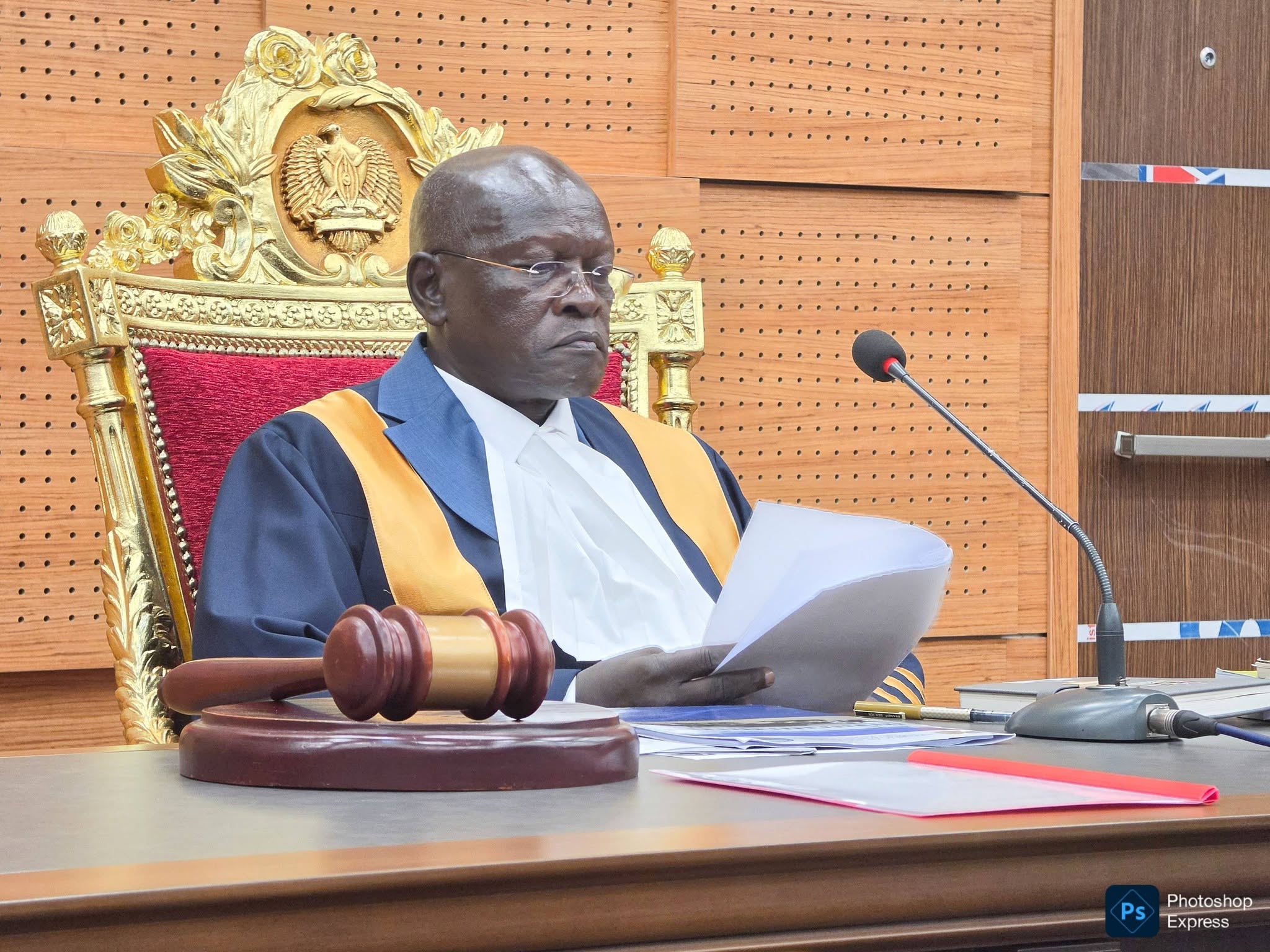
In a statement shared on social media, the Office of the Speaker, Rt. Hon. Joseph Ngere Paciko, asked media organizations to use designated portraits when reporting on the Speaker or the Office of the Speaker.
“The Office of the Right Honourable Speaker of the Transitional National Legislative Assembly, Rt. Hon. Joseph Ngere Paciko, kindly requests all media houses to use the approved official portraits in any coverage relating to the Speaker or the Office of the Speaker,” the statement read.
The directive sparked debate among journalists, editors, and media advocates, many of whom argued that editorial decisions, including the selection of photographs, should remain the responsibility of newsrooms.
Ayaa Irene, Executive Director of the Association for Media Development in South Sudan (AMDISS), questioned the practicality of the request.
“The media does not work like that. Taking photographs, video clips, or audio recordings of a newsmaker is an integral part of a reporter’s assignment. The photograph used in a story must correspond with the content of that story. Therefore, this order will not work for media houses,” she wrote on her personal social media page.
Journalist Manyuon also criticized the move, suggesting that the Speaker’s Office may have misunderstood the role of official portraits in news reporting.
“Maybe the Office of the Speaker does not understand the meaning of portraits. I think they need comprehensive lectures on how the media operates,” he posted.
Chuol Jany, Editor at the Catholic Radio Network (CRN), noted that media organizations generally prefer photographs that provide context and tell a story.
“The Speaker’s Office should recognize that media outlets value images that tell a story. Pictures often speak louder than words, and action photos are important in helping audiences understand the context of a news event,” he said.
Veteran journalist Buda Ladu described the directive as unnecessary and urged parliamentary officials to allow journalists to perform their duties independently.
“The appropriate audience for such a directive would be advertising companies or graphic designers producing official banners and promotional materials, not journalists reporting the news. In journalism, a picture speaks a thousand words, which is why reporters use cameras to capture professional images that accompany their stories,” he said.
Another journalist, Garang Daniel, argued that editorial independence is a fundamental principle of journalism.
“Media houses do not operate that way. Such directives may apply to government institutions, but not to newsrooms. Editorial decisions, including the choice of photographs, belong to editors and media organizations,” he posted.
The directive generated significant online discussion, with more than 20 social media users sharing and commenting on the statement. Most reactions expressed concern that the request could be perceived as interference in editorial independence.
As of publication, the Office of the Speaker had not publicly clarified the purpose or intended scope of the directive. However, media stakeholders continue to call for greater consultation and understanding between public institutions and the press regarding newsroom practices and media freedom.