Leaders across Unity State have issued a united and urgent call to the National Ministry of Finance and Economic Planning to immediately release the long-awaited 3% Petroleum Revenue allocated for Community Development Committees (CDCs), warning that continued delays are worsening suffering in oil-producing communities.
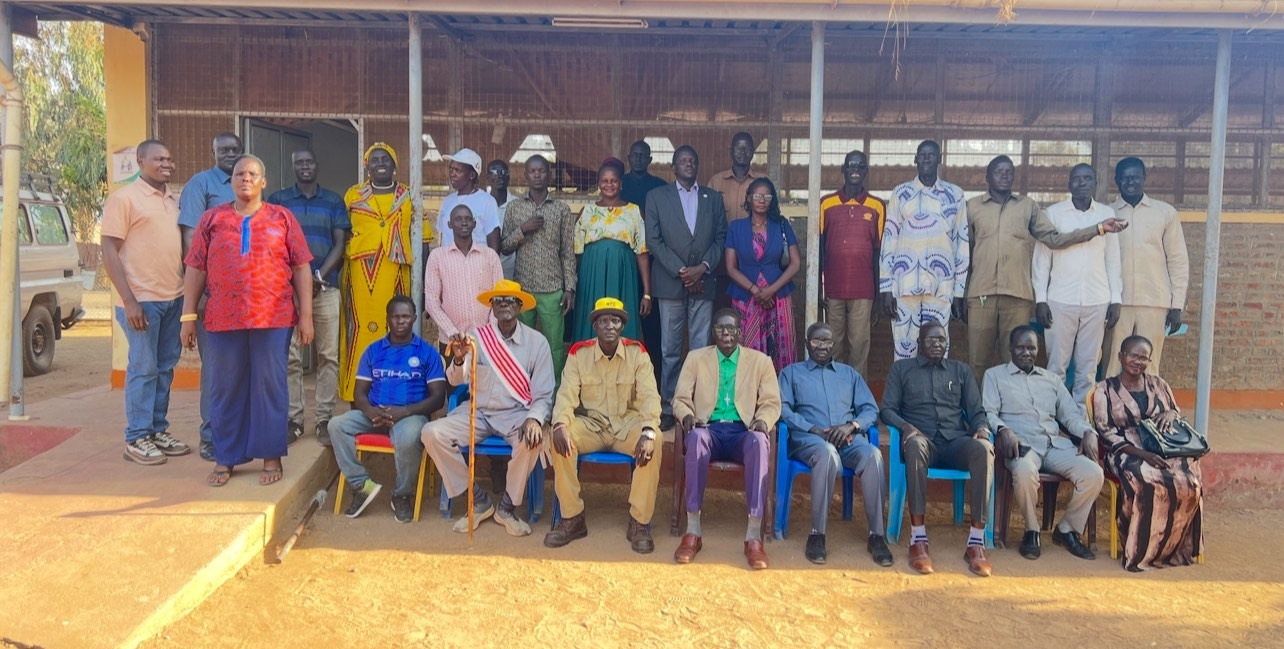
The appeal was made during a one-day roundtable discussion in Bentiu organized by the Civil Society Coalition on Natural Resources (CSCNR). The forum brought together state legislators, traditional authorities, women and youth representatives, business leaders, persons with disabilities, faith-based groups, farmers’ unions, and civil society organizations.
Hon. William Gatluak Nyuot, Chairperson of the Planning and Finance Committee in the Unity State Legislative Assembly, said the state has followed all required procedures to operationalize CDCs in its seven counties since 2021.
However, in July 2023, the Transitional National Legislative Assembly reportedly directed the freezing of the 3% petroleum revenue transfers to Unity State.
Although state authorities were later informed in 2025 that the funds had been released, officials say CDC accounts show no accessible cash.
“Our communities are waiting for these funds to build schools, health facilities, water points and roads. We call for the immediate release of the money into CDC accounts,” Hon. Nyuot stated.
Leaders emphasized that oil-producing communities continue to face flooding, disease outbreaks, poor infrastructure, and limited access to healthcare and education—despite oil being the backbone of South Sudan’s economy.
Several lawmakers accused authorities of secrecy and a lack of accountability in managing petroleum revenues.
Hon. William Gatgwan said communities have not seen tangible projects funded through the 3% allocation since 2013.
“People are suffering. There is no transparency about where the money is. Even the State Assembly lacks basic furniture. Meanwhile, oil is being produced from our land,” he said.
Participants questioned why other oil-producing areas reportedly receive infrastructure investment while Unity State struggles with impassable roads and inadequate facilities, including the lack of shelter at Rubkona Airport, a key humanitarian and transport hub.
Female MP Hon. Nyaloun of Rubkona County raised alarm over environmental pollution linked to oil operations. She cited oil spills and poor waste disposal as contributors to serious health risks affecting women and children.
Lawmakers also alleged irregularities in scholarship programs sponsored by petroleum companies, claiming that benefits are not always awarded on merit and that local students are sometimes sidelined.
While acknowledging contributions by oil operating companies such as Greater Pioneer Operating Company (GPOC) and Sudd Petroleum Operating Company (SPOC)—including teacher recruitment, medical personnel support, ambulances, and scholarships—leaders said the scale of support remains insufficient compared to community needs.
Hon. Mut Wour Tour called for legally binding Memoranda of Understanding between oil companies and host communities to clearly define corporate social responsibility (CSR) priorities.
He further alleged that some subcontractors employ local youth without contracts or insurance, exposing them to exploitation and hazardous conditions.
The roundtable concluded with strong recommendations aimed at ensuring oil wealth directly benefits affected communities immediate release and independent audit of the 3% CDC funds.
Transparent and accountable management of petroleum revenues, calculation of the 3% allocation from gross petroleum sales, not net revenue and increase of the state’s petroleum share from 5% to 10% (5% for CDCs and 5% for state government).
Other demand includes equitable distribution of infrastructure development across all oil-producing states, construction of referral and specialized hospitals in oil-producing areas.
Building modern classrooms and improving road connectivity between Bentiu and surrounding counties.
Speaking on behalf of the Civil Society Coalition on Natural Resources, Gizam Moses commended participants for what he described as an honest and courageous dialogue.
He pledged continued advocacy for sustainable natural resource management, environmental protection, and reinvestment of oil revenues into public services.
As Unity State continues to host significant oil production, leaders say the message from communities is clear: development must be visible, inclusive, and accountable—and oil wealth must translate into improved lives for the people who bear its environmental and social costs.