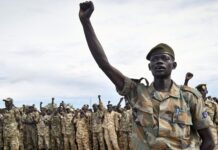


The UN Commission on Human Rights in South Sudan has issued an urgent warning that inflammatory rhetoric by senior military figures and reports of force mobilization in Jonglei State are pushing the country toward mass atrocities, ethnic violence and the collapse of its fragile peace agreement.
The Commission said public statements by commanders and other officials exercising effective command and control combined with active troop mobilization constitute a dangerous escalation at a moment when South Sudan’s political transition is already close to unraveling.
According to the Commission, such conduct significantly heightens the risk of large-scale violence against civilians and reflects a broader breakdown of command discipline in an already volatile and ethnically divided environment.
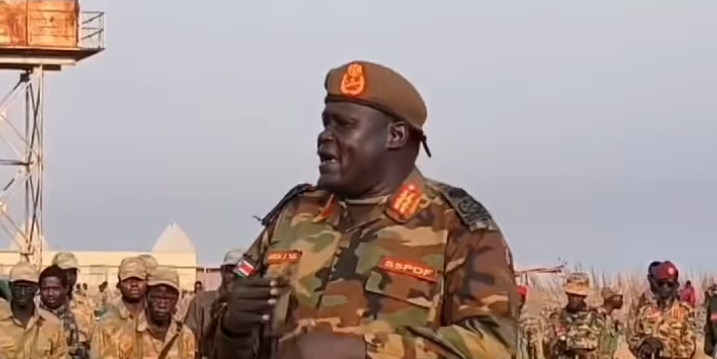
Under international law, military and civilian leaders who incite crimes, or who exercise effective control over forces that commit them, may be held criminally responsible. Liability also extends to those who fail to prevent or punish crimes they knew, or should have known, were being committed.
The Commission stressed that no senior political or military leader in Juba can plausibly claim ignorance of the public and explicit incitement to violence emerging from Jonglei.
“Language that calls for the killing of those who are hors de combat and civilians, including the elderly asserting that ‘no one should be spared’ is not only shocking, but also profoundly dangerous,” said Commission Chair Yasmin Sooka.
“In South Sudan’s past, this kind of rhetoric has preceded mass atrocities. When it comes from, or is tolerated by, those in positions of command, it signals permission to kill and strips away any expectation of restraint. Entire communities are now at grave risk.”
The Commission emphasized that the current escalation is not an isolated incident, but part of a wider political crisis driven by repeated violations of the peace agreement and the steady erosion of command and control.
“This is a moment of acute risk and political responsibility,” said Commissioner Barney Afako. “Words spoken by commanders directly shape behavior on the ground. Reckless or violent rhetoric lowers the threshold for abuse and signals that restraints no longer apply. In this context, force mobilization combined with ethicized messaging risks igniting retaliatory violence that could spiral rapidly beyond control.”
Afako warned that without immediate intervention by South Sudan’s leadership to rein in forces, de-escalate tensions and recommit to consensus politics, the country risks sliding into another phase of widespread violence. He added that the situation now demands urgent, high-level regional engagement to salvage the transition. “We are fast running out of time,” he said.
The Commission reiterated that under international humanitarian and criminal law, superiors bear responsibility not only for crimes they commit or order, but also for crimes they incite or fail to prevent, repress, investigate or punish.
“The peace agreement was designed precisely to prevent this descent into violence,” said Commissioner Carlos Castresana Fernández. “Public statements that encourage attacks on civilians, or that frame entire communities as legitimate targets, may give rise to individual criminal responsibility. Command responsibility attaches to those who exercise effective control, whether orders are formal or conveyed through public statements, threats or deliberate tolerance of incitement.”
The Commission called on all parties to immediately halt inflammatory rhetoric and force mobilization. It stressed that President Salva Kiir, as Commander-in-Chief, bears a heightened duty to exercise effective control over forces operating in his name, to prevent attacks on civilians, and to publicly and unequivocally repudiate ethnic mobilization and exterminatory language.
The Chief of Defence Forces, the Minister of Defence and other officials with operational authority over military actions in Jonglei and elsewhere were also identified as sharing this responsibility.
“Failure to act decisively to halt incitement, rein in commanders and restore command discipline may engage responsibility at the highest levels of leadership,” the Commission warned.
The Commission urged regional and international partners to urgently re-engage to preserve the peace agreement and press South Sudan’s leaders to return to the political path they committed to, warning that failure to do so risks all-out ethnic conflict and another preventable national tragedy.
“This crisis is not inevitable,” Sooka said. “Leadership, restraint and accountability can still avert catastrophe. But deliberate incitement and the abuse of command authority will have consequences—and the window to act is closing fast.”